

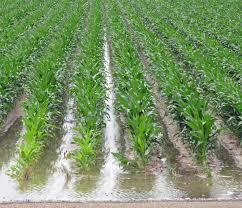
Use of Urea top-dressing fertiliser for high yields
As most parts of Zimbabwe recently received incessant rains, Urea fertiliser presents a good option for effective top-dressing. This is due to the fact that the conventional nitrogen source Ammonium Nitrate generally leaches under incessant rainfall which is not the case with Urea. This article provides basic information concerning Urea and its characteristics. The objective is for farmers to fully appreciate the nature of Urea and its effects, and secondly, to assist farmers with the proper use and application of Urea in Maize specifically.
Basic description of Urea fertilizer
Urea is a white crystalline solid fertilizer containing 46% nitrogen. It is widely used in the agricultural industry as a fertilizer or an animal feed additive. Here, we only discuss its use as a nitrogen top dressing fertilizer. Commercially, Urea fertilizer can be purchased as prills or as a granulated material. In the past, it was usually produced by dropping liquid Urea from a “prilling tower” while drying the product. The prills formed a smaller and softer substance than other materials commonly used in fertilizer blends. Today, Urea is largely manufactured as granules. Granules are larger, harder, and more resistant to moisture. As a result, granulated Urea has become a more suitable material for fertilizer blends.
Advantages of Urea Fertilizer
1. Urea can be applied to soil as a solid, or solution, or to certain crops as a foliar spray.
2. Urea usage involves little or no fire or explosion hazard.
3. Urea’s high nitrogen analysis,( 46% N) helps reduce handling, storage and transportation costs over other dry nitrogen forms.
4. Urea manufacture releases few pollutants to the environment.
5. Urea, when properly applied, results in crop yield increases equal to other forms of nitrogen.
Urea application method for optimal crop response
Nitrogen from Urea can be lost to the atmosphere through volatilization (gaseous) if the fertilizer remains on the soil surface for extended periods of time in warm weather. The key to the most efficient use of Urea is to incorporate it into the soil during with a tillage operation. Urea must be covered by soil immediately unless there is sufficient moisture for it to immediately dissolve into the soil to avoid volatilization losses. It may also be blended into the soil with irrigation water. A rainfall of as little as 6inches/ 154 mm is sufficient to blend Urea into the soil to a depth at which ammonia losses will not occur.
Urea losses to air
Urea breakdown begins as soon as it is applied to the soil. If the soil is totally dry, no reaction happens. But with the enzyme Urease, plus any small amount of soil moisture, Urea normally hydrolyzes and converts to ammonia gas and carbon dioxide. This can occur in 2 to 4 days, and happens quickly on high pH soils. Unless it rains, Urea must be incorporated during this time to avoid ammonia loss. Losses might be quite low in the spring if the soil temperature is low. Urea must always be applied under moist soil conditions.
Tawanda Mthintwa Hove Agrimarketing – hove@windmill.co.zw
Dr Lawrence T Gono Agronomy Head- gono@windmill.co.zw